Short answerAI assistants find restaurants by searching the web and local listings near the person asking. ChatGPT can use an approximate location for local questions and may draw on third-party listing providers; it books tables through OpenTable on eligible plans. Google's AI answers come from its search index, and Google asks for an up-to-date Business Profile. Microsoft's guidelines for Bing also cover Copilot's answers. A restaurant is easiest to recommend when its menu, prices, hours and location are on its website as text, identical to its Google and Bing listings.
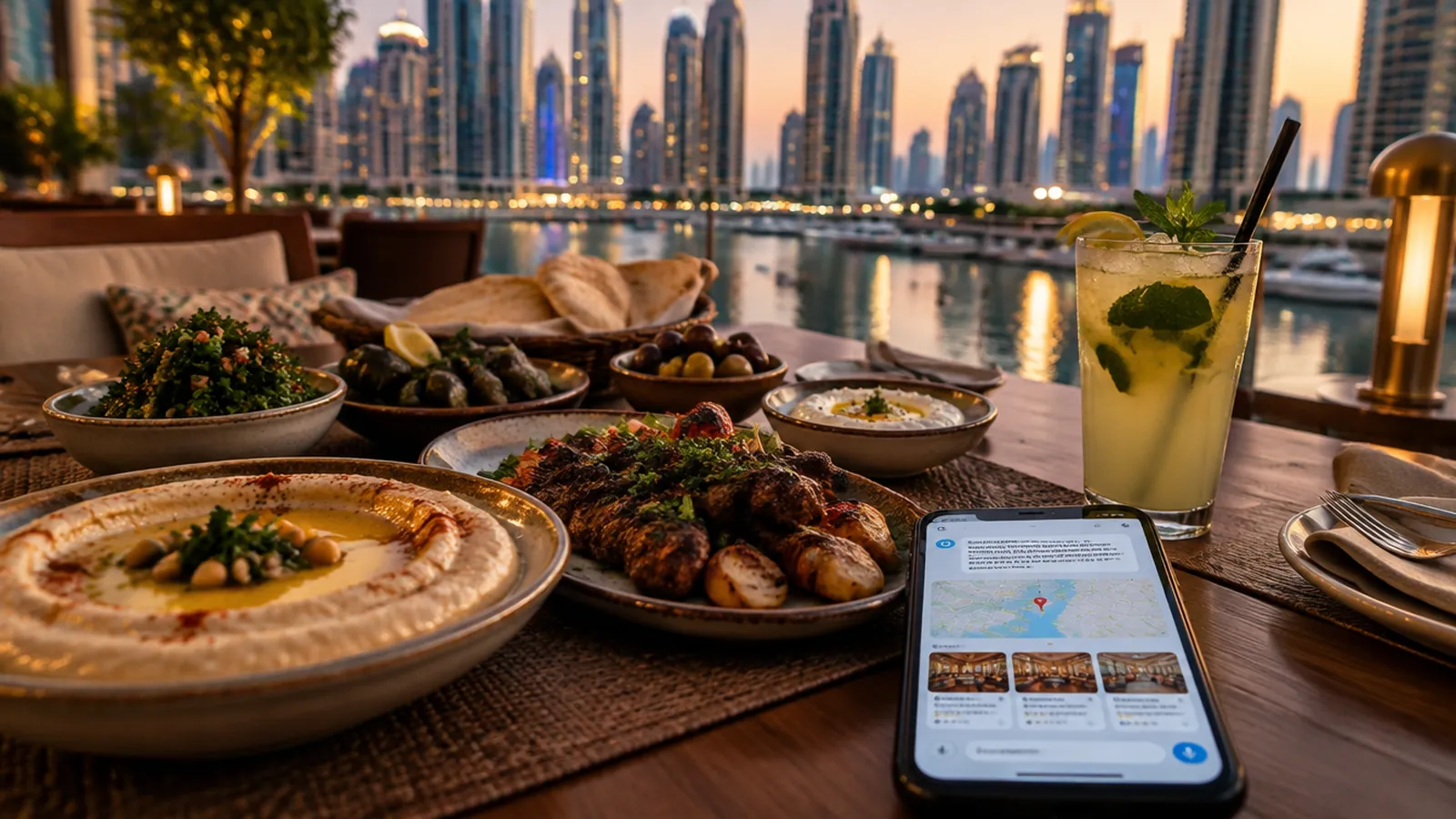
Two friends land at DXB on a Thursday evening and one of them types into ChatGPT: “Lebanese restaurant near Dubai Marina, open late, not too expensive, can we book for 10pm?” The answer names three places with a line on each, a map and, for one of them, a booking button. The restaurants that made the list did nothing special for AI. Their menus, prices, hours and locations were simply easy to find and to read.
How each assistant looks for a restaurant
- ChatGPT can use an approximate location, or the device location if the user allows it, for local questions such as restaurants. OpenAI says it may share location with trusted third-party providers to show nearby business listings, and that maps can appear in results. Table reservations come from OpenTable worldwide, on eligible plans.
- Google's AI Overviews and AI Mode use Google's search index. Google says a page must be indexed and eligible to show with a snippet, and its advice for these features includes keeping your Business Profile up to date.
- Microsoft Copilot: Microsoft's webmaster guidelines cover Bing search and Copilot answers together, so a restaurant that Bing knows well starts ahead. Bing Places for Business is free and its listings show in Bing search and Maps.
None of these companies publishes the full recipe for which restaurants are named. What they do publish points the same way: be findable in their index and listings, and make your facts easy to read.
What an assistant needs from your website
Guests ask about the same few things, and an assistant can only answer them if your website states them plainly:
- The menu as text on a page, with dishes and prices. A menu that exists only as a photo or a PDF is much harder to read and quote.
- Cuisine and style in words: Lebanese grill, Kerala seafood, vegan bakery, family style, shisha terrace.
- Opening hours that are current, including late nights, Friday brunch and Ramadan hours.
- Location in plain words and on a map: area, building, landmark and parking.
- How to book or order: a booking link, WhatsApp or delivery, with the price range.
Our study of 11,029 UAE restaurants found that only 13 % have a website that loads, is up to date and works on a phone. 54 % are online only through a social media page. For an assistant that reads the web, most of these restaurants are close to invisible.
Structured data for restaurants
Google's documentation for local business markup asks for the most specific type, such as Restaurant, with name and address required. It recommends the menu link, the cuisine, opening hours, the price range, the phone number, the website and coordinates. Schema.org also defines a Menu type with sections and items, and an acceptsReservations property. The markup has to match what guests can see on the page. Our guide to structured data for a local business shows the basics.
Your listings matter as much as your website
Assistants compare what your website says with your Google Business Profile, your Bing Places listing and the booking platforms you use. Google says local results depend on relevance, distance and prominence, and that prominence draws on how many websites link to a business and how many reviews it has. Keep the name, address, phone, hours and menu link identical in all of them.
This week
- Put your full menu with prices on a page as text, not only as a PDF or photo.
- Update your opening hours on the website, Google Business Profile and Bing Places on the same day.
- Add Restaurant structured data with your menu link, cuisine, hours and price range.
- If you take bookings, make sure your booking platform listing has the same details.
- Ask ChatGPT and Google three questions a guest would ask about your area and cuisine, and note who is named.
Our restaurant websites are built this way: the menu as text you change from your phone, the hours everywhere at once and a button to order on WhatsApp.
Questions
How does ChatGPT choose which restaurants to recommend?
OpenAI does not publish its ranking. It says ChatGPT can use an approximate location for local questions, may use third-party providers for nearby listings and needs to be allowed to crawl a site to include it in search. Restaurants whose menu, hours and location are easy to find and read are easier to recommend.
Can ChatGPT book a table at my restaurant?
OpenAI says restaurant reservations in ChatGPT come from OpenTable worldwide, on eligible plans. If you take bookings through OpenTable, keep that listing complete and identical to your website.
Should my restaurant menu be a PDF?
A PDF or a photo can stay as a download, but the menu should also be on a page as text with dishes and prices. Text is far easier for search engines and AI assistants to read and quote.
Does Google's AI Mode use my Google Business Profile?
Google's guidance for its AI features says the usual basics apply, including keeping your Business Profile up to date, and that pages must be indexed and eligible to show with a snippet.
What structured data should a restaurant website use?
Restaurant markup with name and address, plus the menu link, cuisine, opening hours, price range, phone, website and coordinates. The markup must match what guests see on the page.
Sources
- OpenAI Help Center: Searching the web with ChatGPT
- Google Search Central: AI features and your website
- Google Search Central: Local business structured data
- Schema.org: Restaurant
- Bing Webmaster Tools: Webmaster guidelines
- Bing Blog: Introducing the new Bing Places for Business
- Google Business Profile Help: Tips to improve your local ranking on Google
- Dubai Municipality: Calorie declaration and healthy claims in food establishments